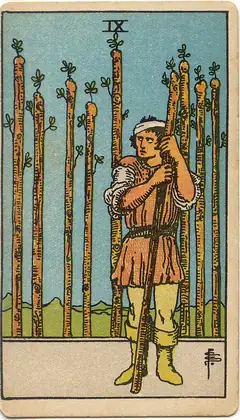

The bandage, the backward glance and the fence
In Pamela Colman Smith’s 1909 Rider-Waite-Smith drawing, a man with a bandage around his head leans on a single wand. He looks warily over his shoulder. Behind him, eight wands stand upright in the ground in a row, like a fence.
The bandage says he has been hurt. The glance says he is still alert for another challenge. The eight planted wands can be read as the work already done, and the ninth in his hand holds his weight. He is not running, but he is not lying down either.
Reversed: when wariness hardens
Reversed, weariness wins. You may feel burnt out, bitter or ready to quit near the end. Wariness can harden into distrust of everyone, or a belief that the next challenge will be as bad as the last.
Some readers see stubbornness here: refusing help, or insisting on doing everything alone. The compassionate reading is that rest is needed. Reversed does not mean you have failed. It invites you to lower the defences a little, accept support and recover before the last push.
Feelings, advice and a gentler form of endurance
As feelings, it describes weariness, wariness and stubborn determination. Reversed, it describes being spent or suspicious.
As advice, it says to keep going, but to rest when you can and accept help. Reversed, it advises a real break and a review of which defences you still need. Strength shares the theme of endurance, with a gentler hand.