
Planted feet, restless sky: what the Page of Swords shows
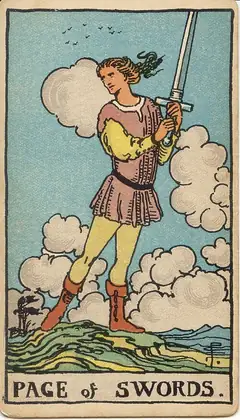
In Pamela Colman Smith’s 1909 Rider-Waite-Smith image, a young figure stands on a windy hilltop holding a sword upright, the point towards the sky. The other hand is held out from the body and the head turns to the side, as if alert for movement.
The landscape is lively. Clouds are scattered, birds fly overhead and the trees in the distance are bent by the wind. Everything in the picture is in motion except the Page’s planted feet. The mood is of someone on the brink: curious, ready to move, but not yet sure which way.
Asking the question out loud: the upright Page
Upright, the Page of Swords is about curiosity, vigilance and the wish to understand. It may describe someone studying a new subject, asking searching questions or cutting through vagueness with a direct query. It can also be a message or a piece of news.
Its attitude is honest and sometimes impatient. The Page may not yet have the experience to be tactful, so the truth can arrive a little sharply. The card therefore asks you to consider how you phrase things as well as what you say.
Other themes are learning quickly, watching carefully before acting and being ready to defend an idea. The card suits a stage of research, before decisions are made.
Talking more than thinking: the reversed Page
Reversed, the Page’s energy scatters. You might be gossiping, taking up too many ideas without following any, or saying things you have not checked. The sword swings carelessly.
The reversed card can also show a lack of follow-through, or someone who is all talk. It is not a fixed flaw, just a reminder to slow down, check facts and hold back words that could hurt until you have weighed them.
Research, junior roles and checking sources: work and money
At work the Page of Swords fits learning, research, writing, analysis and communication, and sometimes a junior role or a keen new colleague. It can mean an idea worth testing or a useful piece of information. It suggests asking questions early and verifying claims.
Reversed, it may indicate rumours, unfocused projects or a badly worded message. For money, it suggests gathering facts before deciding and avoiding hearsay. This is not financial advice, and any significant decision deserves qualified guidance.
Eagerness and care: feelings and advice
As a feeling, the Page can describe eagerness, alertness, nervous energy or a wish to know more. It may describe someone watching a situation closely.
As advice, it says to stay curious, ask the direct question, check your sources and choose your words with care. The Page is where ideas start, so treat them as beginnings and not conclusions.
What am I curious about, and which question am I avoiding?
Which question have I been avoiding because I suspect I know the answer?