
All motion and no destination: the image
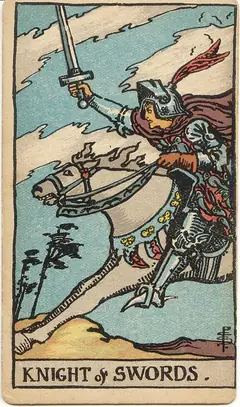
In Pamela Colman Smith’s 1909 Rider-Waite-Smith design, a knight in armour rides a white horse at full gallop, sword raised high in his right hand. The horse is driving forward with its mane and tail streaming behind it, and the knight leans into the wind, his plume and cloak pulled back. He faces the viewer’s left.
The setting is stormy. Trees are bent by the gale and heavy clouds fill the sky. Butterflies and birds decorate his tunic and the horse’s harness, the traditional air symbols of the suit. The ground is rough and there is no path, so he is cutting straight across country. What the picture does not show is where he is going, and that is the heart of the card.
Courage, debate and the cost of not looking ahead: the upright Knight
Upright, the Knight of Swords means swift action and unwavering focus. Someone has decided and is going for it. The card can describe an ambitious project, a fast-moving situation, a person who speaks their mind plainly, or your own drive to push something through.
It can also be a card of courage. When a decision has been put off too long, the Knight reminds you that action is sometimes the answer. The caution is in the image itself: he rides hard with little regard for the terrain, so the question is whether you have looked where you are going.
Other themes are intellectual confidence and a love of argument for its own sake. His directness is a virtue when it is kind and a hazard when it is not.
When the horse outruns the rider: the reversed Knight
Reversed, the energy runs ahead of judgement. You may be rushing, talking over people, taking risks without preparation, or burning out from trying to do everything at once. It can also describe someone argumentative, tactless or inconsistent.
The reversed card can equally show the horse slowing. Drive is spent and a break is overdue. The message is a constructive one: slow down enough to steer, and notice the people riding beside you.
Deadlines, ambition and impulse spending: work and money
At work the Knight is an ambitious go-getter, a rapid project, a sudden change of direction or a sharp, competitive environment. It supports decisive action and clear communication, but asks for care with detail and with colleagues.
Reversed, it suggests haste, errors, overwork or conflict caused by impatience. For money it counsels against acting on impulse; wait until the facts are checked. This is not financial advice, and big choices deserve input from a qualified professional.
Intensity and a plan: feelings and advice
As a feeling, the Knight describes intensity, urgency, confidence or restlessness. It can describe someone single-minded about a goal.
As advice, it says to act on what you know, but check the map first. Speak plainly and keep an eye on the effect of your words.