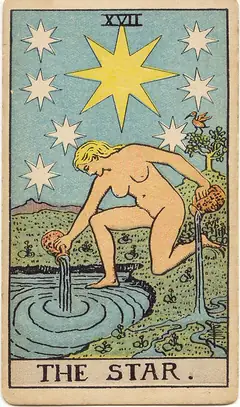

The Star in brief: Aquarius, Air and 17 reduced to 8
| Upright | Hope, renewal, calm, faith in the future |
| Reversed | Discouragement, disconnection, lost faith |
| Element | Air |
| Astrology | Aquarius |
| Numerology | 17, which reduces to 8 (1 + 7): quiet strength and rebuilding |
| Yes or no | Leans yes |
The calm after The Tower, and the night still to come
The Tower is sudden collapse. The Star, the next card, is not a reward for surviving it and not a return to how things were. It is what the first quiet looks like once the noise has stopped.
It leads to The Moon, where the mood turns to uncertainty and imagination. Read as a pair, they suggest that hope does not remove doubt, and that both can be held together. The sign linked to the card is Aquarius, whose reputation for ideals and the future suits the forward-looking feel.
Upright: nothing has to be forced
Upright, The Star stands for hope and renewal. It often appears after a period of difficulty, offering a sense that recovery is possible. It is a card of healing, calm and gentle faith rather than a blaze of triumph.
It also suggests inspiration: a renewed sense of purpose, creativity or trust in yourself. The woman pours out her water freely, and the card invites you to give and receive without anxiety. It is a good card to meet if you feel tired.
Reversed: hope that feels out of reach
Reversed, The Star often points to hope that feels distant. You may be discouraged, doubting yourself or feeling cut off from whatever usually gives you meaning. It can be a card for a flat mood after a long stretch of effort.
A gentle reading is that the light is still there and you are not yet seeing it. Small, calming routines can help, such as time outdoors, rest, a creative hobby or a chat with someone who believes in you. If low mood persists, it is worth speaking to a doctor or counsellor. The reversed Star does not mean hope has gone, only that it needs tending.
Love: trust, honesty and quiet healing
Upright, it suggests trust, honesty and quiet renewal. It can describe healing after a difficult time, meeting someone who feels like fresh air or becoming more open to love after closing up. For single readers, it can encourage patience and self-compassion.
Reversed, it may indicate doubt about love, guardedness after hurt or distance from a partner. It invites you to be kind to yourself and share how you feel at your own pace.
Work and money: direction and long-term goals
Upright, it points to inspiration, a sense of direction and support for long-term goals, especially creative or idealistic ones. It can indicate recognition arriving in time, or simply renewed energy for your work.
Reversed, it may suggest lost motivation, doubts about your path or difficulty seeing the way forward. This is reflection, not financial advice. For money decisions, consult a qualified professional.
Feelings, advice and a question about what restores you
As feelings, The Star describes calm optimism, relief and trust. Reversed, it can describe weariness or a dip in confidence. As advice, it says to rest, restore yourself and accept that recovery takes time.
Its reduced number is explored in life path number 8, and for a related hopeful mood in the numbers, see the page on angel number 444. What restores you when you are worn out, and when did you last make time for it?